
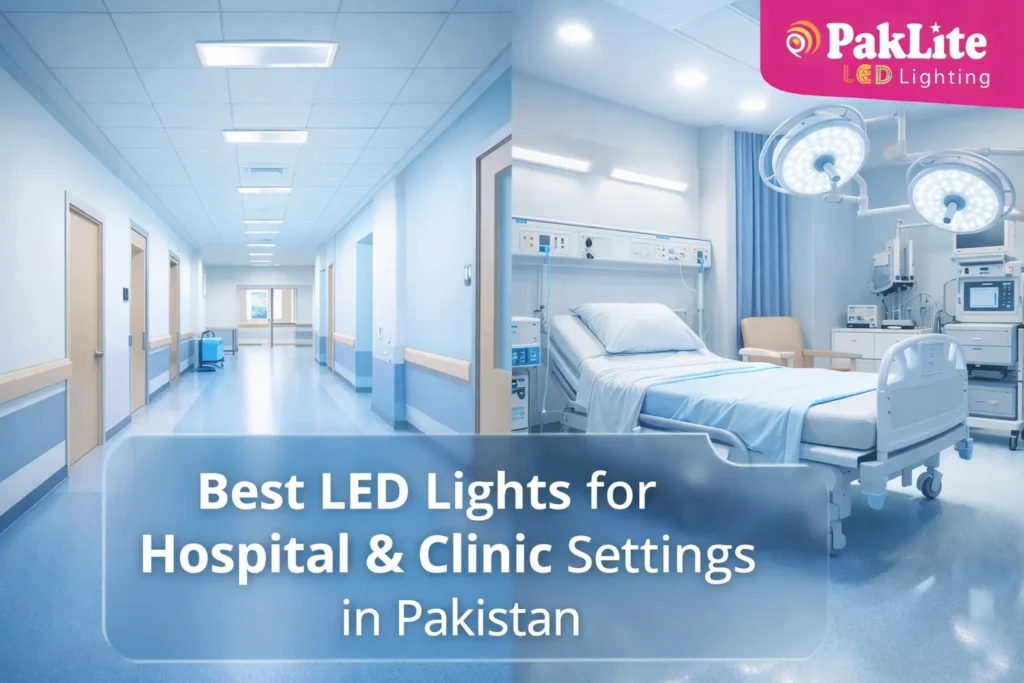
Lighting in a hospital or clinic is not just about visibility it is a direct factor in patient recovery, staff performance, and diagnostic accuracy. Incorrect lighting in a medical setting can cause eye strain for surgeons, increase patient anxiety, and even lead to misdiagnosis. In Pakistan, where healthcare facilities are rapidly modernizing, choosing the right LED lighting solution has become a clinical priority.
This guide covers everything healthcare facility managers, hospital administrators, and clinic owners in Pakistan need to know about selecting the best LED lights from operating theaters to waiting rooms. PakLite’s medical-grade lighting range is designed to meet international healthcare standards while being optimized for Pakistan’s power infrastructure.
Why LED Lighting Is the Gold Standard for Healthcare Facilities
LED technology offers a unique combination of benefits that no other light source can match for healthcare environments. LED lights operate with zero flicker, zero UV emissions, and near-zero heat output all critical qualities in spaces where patients spend extended time and staff perform precision tasks.
From an energy standpoint, upgrading a hospital in Pakistan from fluorescent to LED lighting reduces electricity consumption by up to 60%. Given Pakistan’s electricity tariff increases and load shedding challenges, this translates into significant monthly savings that can be reinvested into patient care. A well-designed LED system also lasts over 50,000 hours, dramatically reducing bulb replacement frequency and maintenance costs.
Key Technical Parameters: CRI and Color Temperature for Medical Lighting
Two specifications define whether an LED light is suitable for healthcare: Color Rendering Index (CRI) and Color Temperature (measured in Kelvin). Getting these right is non-negotiable in a clinical environment.
Color Rendering Index (CRI) measures how accurately a light source renders the true colors of objects compared to natural daylight. A CRI of 100 is perfect natural sunlight. In medical settings, the IEC standard 60601-2-41 specifies that surgical and diagnostic luminaires require a CRI between 90 and 100. For general ward and clinic areas, a minimum CRI of 80 is acceptable but CRI 90+ is always recommended for superior clinical accuracy.
Color Temperature determines whether light appears warm (yellowish) or cool (bluish-white). For diagnosis and examination areas, a neutral to cool white between 4000K and 6500K is ideal. For patient recovery wards and waiting areas, a warmer tone of 3000K–4000K creates a calming, less clinical atmosphere that supports rest and reduces patient anxiety.
Room-by-Room LED Lighting Guide for Hospitals and Clinics in Pakistan
Each area of a healthcare facility has distinct lighting requirements. A single lighting specification across the entire building is one of the most common and costly mistakes in hospital design. Here is a breakdown of recommended LED specifications for every key zone:
- Operating Theater: Requires surgical-grade LED lights with 90–100 CRI, 5000K–6500K color temperature, and a minimum illuminance of 10,000 lux at the operating field. Shadow-free, adjustable multi-arm fixtures are essential.
- Examination & Consultation Rooms: CRI 90+, 4000K–5000K, 300–500 lux. LED panel lights or recessed downlights with even diffused illumination work best for accurate patient assessment.
- Patient Wards: Dimmable LED panels at 3000K–4000K, 100–300 lux. Dimmable fixtures allow nurses to reduce light levels during rest hours without fully switching off lighting.
- Emergency & ICU: 6000K cool white, 300–500 lux, CRI 90+. ICU lighting should support both intensive care procedures and patient sleep cycles — tunable white LED systems are the best solution.
- Waiting Rooms & Reception: Warm white 3000K–3500K, 200–300 lux. Comfortable, non-clinical lighting reduces patient stress and creates a welcoming first impression.
The Role of Dimmable and Tunable LED Lights in Modern Healthcare
Dimmable LED lights are transforming patient care in forward-thinking hospitals and clinics across Pakistan. In patient rooms, dimming capability allows caregivers to reduce light levels at night to support rest and recovery without completely darkening the room a critical safety requirement for overnight monitoring.
Tunable white LED technology takes this further by allowing staff to shift color temperature from warm to cool throughout the day, mimicking natural daylight cycles. This circadian lighting approach has shown measurable benefits in healthcare settings, including improved patient sleep quality, reduced agitation in long-term care patients, and better staff alertness during extended shifts. PakLite’s dimmable LED panel range supports 0–100% dimming and is compatible with most standard DALI and PWM control systems available in Pakistan.
Energy Savings and ROI for Healthcare LED Lighting in Pakistan
Hospitals operate 24 hours a day, 365 days a year making energy efficiency a financial imperative. A medium-sized hospital in Pakistan running 500 fluorescent fixtures can save hundreds of thousands of rupees annually by switching to LED. The typical return on investment for a full LED retrofit in a Pakistani clinic or hospital is 18–30 months, after which the savings are pure profit.
Beyond direct energy savings, LED lights reduce HVAC load. Fluorescent and halogen lights emit significant heat, which increases air conditioning requirements an important consideration in Pakistan’s hot climate. LED lights run cool, reducing total facility cooling costs in addition to direct lighting expenses.
Anti-Glare and Flicker-Free Performance: Why It Matters in Clinical Spaces
Glare and flicker are invisible hazards in medical environments. High glare levels from poorly designed lighting can cause headaches, eye fatigue, and reduced concentration in medical staff with potentially serious consequences during long procedures. Anti-glare LED panels with a Unified Glare Rating (UGR) below 19 are recommended for clinical and examination areas.
Flicker even imperceptible high-frequency flicker causes visual fatigue and has been linked to increased headache frequency among hospital staff. PakLite’s medical LED panels operate at flicker levels below 1%, meeting international healthcare lighting standards and ensuring a comfortable working environment for doctors, nurses, and patients alike.
PakLite’s Recommended LED Lighting Products for Pakistani Healthcare Facilities
PakLite offers a purpose-built range of LED solutions for hospitals, clinics, diagnostic labs, and pharmacy settings across Pakistan. All products are tested for CRI compliance, flicker performance, and thermal management to ensure reliability in continuous-operation healthcare environments.
For operating rooms and surgical suites, PakLite’s high-CRI (95+) recessed LED panel lights deliver the precision illumination surgeons require. For patient wards, the dimmable slim LED panels (3000K–4000K) create a calm healing environment. For hospital corridors and common areas, IP44-rated LED surface mount panels provide bright, even lighting with minimal glare and maximum energy efficiency.
Frequently Asked Questions (FAQs)
Q1. What CRI rating is required for hospital LED lights in Pakistan?
A minimum CRI of 80 is acceptable for general areas, but examination rooms, labs, and operating theaters require CRI 90–100. High CRI ensures accurate color rendering, which is critical for clinical diagnosis and surgical procedures.
Q2. What color temperature LED lights are best for hospital waiting rooms in Pakistan?
Warm white LED lights in the 3000K–3500K range are ideal for waiting rooms and reception areas. This temperature creates a welcoming, non-clinical atmosphere that reduces patient anxiety and improves the overall experience of the facility.
Q3. Can LED lights improve patient recovery in Pakistani hospitals?
Yes. Properly designed LED lighting that mimics natural daylight cycles supports circadian rhythms, improves sleep quality, and has been shown in clinical studies to reduce average hospital stay duration. Dimmable and tunable white LEDs are especially effective in patient ward environments.
Q4. Are flicker-free LED lights necessary for hospital environments?
Absolutely. Flickering lights even at imperceptible frequencies cause eye strain and headaches in medical staff during long shifts. Flicker-free LED lights with less than 1% flicker index are a healthcare standard, not a luxury, particularly in areas where staff work for 8–12 hour periods.
Q5. How much can a Pakistani clinic save by switching to LED lighting?
A typical clinic running 50–100 fluorescent fixtures can save 50%–60% on its monthly lighting electricity bill after switching to LED. With Pakistan’s current electricity tariffs, this often represents annual savings of Rs. 80,000–Rs. 250,000 or more, with a full return on investment within 18–30 months.
Conclusion: Invest in the Right LED Lights for Better Patient Outcomes
Lighting in a healthcare setting is not a secondary concern it is a clinical decision. The right LED lights improve diagnostic accuracy, support patient recovery, protect staff wellbeing, and reduce the facility’s long-term operating costs. In Pakistan’s rapidly evolving healthcare sector, upgrading to high-performance LED lighting is one of the smartest investments a hospital or clinic can make.
PakLite provides a complete medical LED lighting range built to international healthcare standards, sourced and supported in Pakistan. Whether you are outfitting a new hospital, retrofitting an existing clinic, or upgrading a single examination room, PakLite has the right solution for your needs.
Visit paklite.com to explore PakLite’s healthcare LED lighting range or contact the team for a customized lighting consultation for your facility.