
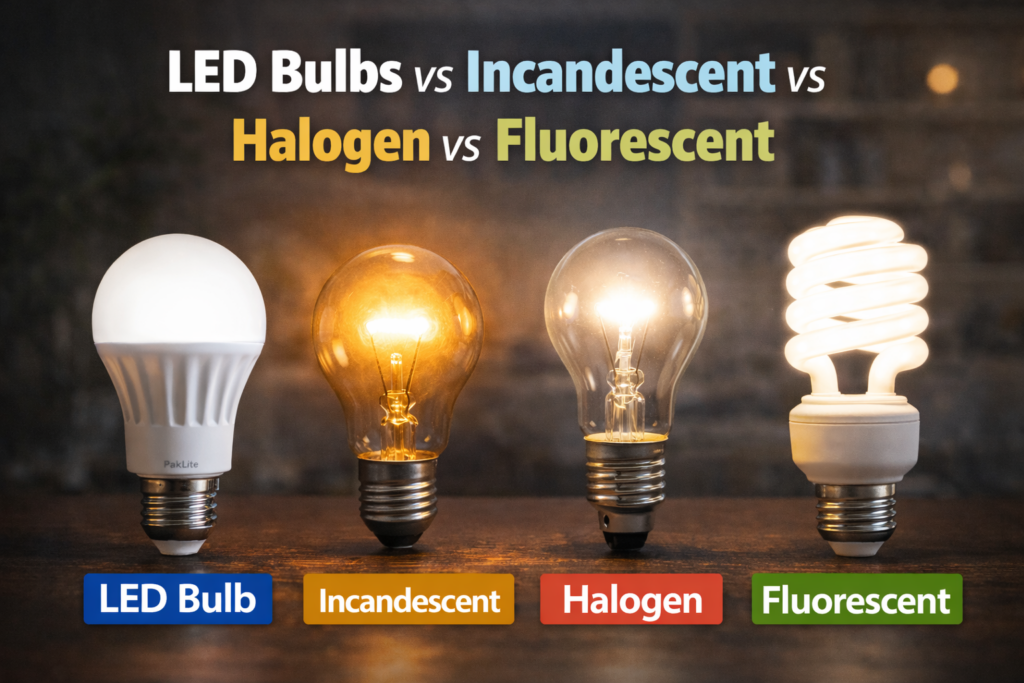
Lighting technology has evolved rapidly over the last decade, and by 2026, the choices available to consumers are more advanced than ever. Still, many people remain confused when comparing LED bulbs vs incandescent vs halogen vs fluorescent lighting. Each type has its own history, performance, and purpose—but which one is truly better today?
Understanding the Four Main Types of Light Bulbs
Before deciding which bulb is better, it’s important to understand how each type works and what it offers.
LED Bulbs (Light Emitting Diode)
LED bulbs use modern semiconductor technology to produce light efficiently. Instead of generating light through heat, LEDs convert electricity directly into illumination. This makes them the most advanced lighting option available in 2026.
Incandescent Bulbs
Incandescent bulbs are the oldest form of electric lighting. They produce light by heating a metal filament until it glows. While the light feels warm and natural, most of the energy is wasted as heat.
Halogen Bulbs
Halogen bulbs are a modified version of incandescent bulbs. They provide brighter light and slightly better efficiency, but they still rely heavily on heat to produce illumination.
Fluorescent Bulbs
Fluorescent lighting works by passing electricity through gas and mercury vapor to create ultraviolet light, which then becomes visible light. These bulbs were once popular for offices and commercial spaces.
Energy Use and Efficiency in Everyday Life
In 2026, energy efficiency is no longer optional—it’s essential. LED bulbs clearly stand out because they require far less electricity to produce the same brightness as traditional bulbs. Incandescent and halogen bulbs consume significantly more power, making them costly to run over time. Fluorescent bulbs improved efficiency compared to older technologies, but they still fall short when compared to LEDs, especially in homes where lights are switched on and off frequently.
Lifespan and Long-Term Convenience
One of the biggest differences between LED bulbs and traditional lighting is longevity. LED bulbs are designed to last for many years without frequent replacement. Incandescent and halogen bulbs burn out quickly, leading to repeated replacements and inconvenience. Fluorescent bulbs last longer than incandescent options but are fragile and sensitive to switching cycles, which can shorten their lifespan in residential use.
Light Quality and Visual Comfort
Light quality plays a major role in comfort, productivity, and eye health.
- LED bulbs offer consistent, flicker-free light and are available in multiple color temperatures, from warm to cool.
- Incandescent bulbs provide warm light but generate excessive heat.
- Halogen bulbs are bright but can cause glare and discomfort.
- Fluorescent bulbs often produce harsh light and may flicker, causing eye strain.
For homes, offices, and retail spaces in 2026, LED lighting offers the best balance of brightness and comfort.
Environmental Impact and Safety Considerations
Environmental awareness has become a major factor in lighting choices. LED bulbs are eco-friendly, contain no hazardous materials, and reduce carbon emissions due to lower energy use. Fluorescent bulbs contain mercury, which requires careful disposal. Incandescent and halogen bulbs waste energy and contribute to higher environmental impact through excessive heat production.
Cost Over Time: What Really Saves Money?
Although incandescent bulbs may appear cheaper at purchase, their high energy consumption and short lifespan make them expensive in the long run. Halogen bulbs fall into a similar category. LED bulbs may have a slightly higher upfront cost, but their durability and efficiency result in major savings over time. Fluorescent bulbs sit somewhere in between but lack the long-term reliability of LEDs.
Which Light Bulb Makes Sense in 2026?
As technology advances and energy regulations tighten, incandescent and halogen bulbs are becoming outdated. Fluorescent lighting is slowly being replaced due to environmental concerns. LED bulbs are clearly the best choice in 2026 for residential, commercial, and industrial lighting. They combine efficiency, comfort, safety, and long-term value in a way other technologies cannot match.
FAQs: LED vs Incandescent vs Halogen vs Fluorescent
Which light bulb is best for homes in 2026?
LED bulbs are the best option due to efficiency, comfort, and lifespan.
Are incandescent bulbs still worth using?
They offer warm light but are inefficient and costly over time.
Do fluorescent bulbs have health risks?
They may cause eye strain and contain mercury, requiring careful handling.
Are LED bulbs suitable for all rooms?
Yes, LEDs are available in different color temperatures for every space.
Why are LED bulbs replacing traditional lighting?
Because they save energy, last longer, and are environmentally responsible.
Final Conclusion
When comparing LED bulbs vs incandescent vs halogen vs fluorescent lighting, the answer in 2026 is clear. LED bulbs outperform traditional options in almost every way—from efficiency and lifespan to comfort and sustainability.
If you’re planning to upgrade your lighting, choosing modern LED solutions ensures better performance today and long-term benefits for the future.