
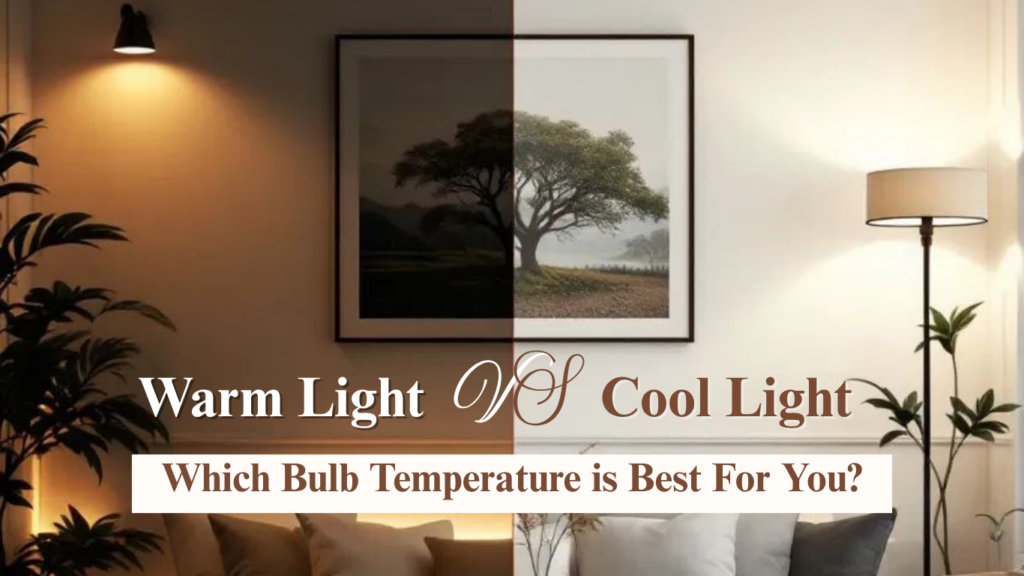
Choosing between warm light vs cool light can transform your space. Warm light creates a cozy and relaxing feel, while cool light enhances focus and brightness. The right bulb temperature depends on your space’s purpose, decor, and desired mood.
Warm Light Versus Cool Light
Lighting has a powerful impact on how we feel, think, and experience a space. Whether you’re setting up your home, office, or a commercial area, understanding the difference between warm light and cool light helps you create the right atmosphere.
When you compare warm light vs cool light, you’re essentially comparing two ends of the color temperature spectrum measured in Kelvin (K).
- Warm Light (2700K – 3000K): Emits a soft, yellowish glow that feels relaxing and welcoming.
- Cool Light (4000K – 6500K): Produces a bright white or bluish tone that feels crisp, clean, and energizing.
Warm lighting makes a space feel intimate and cozy, while cool lighting enhances clarity and focus that is ideal for professional or task-oriented areas.
This is why interior designers and lighting experts often recommend combining both tones to create balance and depth.
Bulb Temperature Explained
Bulb Temperature, also called Color Temperature, refers to the hue or tone of light emitted by a bulb. It doesn’t measure the actual heat of the bulb but the color appearance ranging from warm yellow to cool blue-white.
Bulb Temperature Explanation:
- The lower the Kelvin value, the warmer (more yellow/orange) the light appears.
- The higher the Kelvin value, the cooler (more white/blue) the light becomes.
| Color Temperature (Kelvin) | Appearance | Best For |
| 2700K – 3000K | Warm White | Bedrooms, living rooms, restaurants |
| 3500K – 4100K | Neutral White | Kitchens, reading areas, hallways |
| 5000K – 6500K | Cool White / Daylight | Offices, garages, hospitals, study areas |
Warm white vs cool white light creates dramatically different moods. A warm white bulb produces a golden, candlelight-like glow perfect for relaxation. A cool white bulb, on the other hand, mimics natural daylight ideal for clarity and concentration.
When choosing between LED light warm white vs cool white, think about how you want your space to feel. Soft and cozy? Go warm. Bright and energizing? Go cool.
When to Use Warm Light?
Warm light is comforting and inviting that is ideal for spaces where relaxation and coziness matter most.
Warm light works best in settings that prioritize comfort and emotional warmth. Think of your living room, bedroom, or dining area. The gentle golden hue helps you unwind after a long day, creating a relaxing atmosphere that encourages rest and calm conversation.
Best Places to Use Warm Light:
- Living Rooms & Bedrooms: Creates a soothing, cozy environment for rest.
- Dining Areas & Restaurants: Enhances mood and appetite by mimicking candlelight.
- Hotels, Cafes, and Lounges: Evokes a sense of comfort and elegance.
Warm lighting highlights earthy tones and wood finishes beautifully, making interiors look inviting and rich.
Why Choose Warm Light?
- Promotes relaxation and sleep readiness
- Softens facial tones and enhances decor
- Reduces harsh shadows for a pleasant glow
So if you’re lighting your home for nighttime comfort, warm white bulbs are your best option.
When to Use Cool Light?
Cool light keeps you alert, sharp, and energized ideal for focused activities and modern spaces.
If your goal is productivity or visibility, cool lighting is the way to go. It resembles daylight and provides a crisp brightness that improves focus and accuracy making it a favorite for offices, study areas, and task zones.
Best Places to Use Cool Light:
- Home Offices & Workspaces: Boosts concentration and energy.
- Kitchens & Bathrooms: Ensures clarity for detailed tasks.
- Retail Stores & Studios: Highlights products and details with precision.
Why Choose Cool Light?
- Mimics daylight for better visibility
- Enhances alertness during work or study
- Ideal for areas requiring clarity and attention to detail
However, while cool light supports focus, it can feel harsh if used everywhere. For balanced comfort, mix cool white light in task areas with warm light in relaxation zones.
Choosing the Right Light Bulb Temperature
The best lighting setup combines both warm and cool tones to suit your space, mood, and daily activities.
Lighting is never one-size-fits-all. Each room in your home or office has its own purpose and therefore, its own ideal bulb temperature.
Here’s How to Choose Wisely:
- For Living Rooms & Bedrooms:
Opt for warm white light (2700K – 3000K). It enhances coziness and helps you unwind after dark. - For Kitchens & Bathrooms:
Choose cool white light (4000K – 5000K). It offers brightness and clarity for cooking, grooming, or cleaning. - For Offices & Workspaces:
Use daylight or cool light bulbs (5000K – 6500K). The bluish tone keeps you focused and productive. - For Reading Areas:
A balanced neutral white (3500K – 4100K) works best. It reduces eye strain without being too harsh.
When comparing warm white vs cool white light bulbs, remember that many modern LED bulbs come with adjustable color temperatures. These “tunable” LEDs allow you to switch between warm and cool tones depending on the time of day or activity.
Pro Tip: Layer Your Lighting
Interior designers often layer lighting to achieve both mood and function.
Use warm light for ambient lighting and cool light for task or accent lighting. For example:
- Pair a warm ceiling light with a cool desk lamp.
- Install cool under-cabinet lights in kitchens with warm overhead fixtures.
- Add dimmable LED bulbs to control brightness and temperature dynamically.
This blend creates harmony.
Examples of choosing warm light vs cool light based on your needs
Warm light vs cool light for eyes
For those wondering about warm light vs cool light for eyes, warm tones tend to be gentler, especially in the evening, because they contain less blue light. Blue light found in cool bulbs can interfere with melatonin production and sleep patterns.
Warm light vs cool light for reading
But Cool lighting is especially effective when reading or working. For instance, if you’re comparing warm light vs cool light for reading, cool or neutral white light provides better contrast on paper or screens, reducing eye fatigue and improving comprehension.
For long screen hours or reading sessions, use neutral white light around 4000K. It’s the ideal midpoint in the warm light vs cool light for eyes by minimizing glare while keeping you alert.
With today’s smart lighting solutions, you can easily adjust brightness and color temperature to fit every moment.
Choosing the Right Light
All energy-efficient LED lights by Pak Lite are available in a wide range of color temperatures, from warm white to cool daylight so you can create the perfect ambiance for any space. Whether you want a cozy, relaxing glow or bright, focused illumination, Pak Lite has you covered.
Many of our LED bulbs even come with adjustable color temperature options, allowing you to switch between warm and cool tones just like adjusting brightness, giving you full control over your environment.
Get Your Lighting
Explore the complete range of Pak Lite lighting and electrical solutions to find the perfect lighting for your home or workspace.